

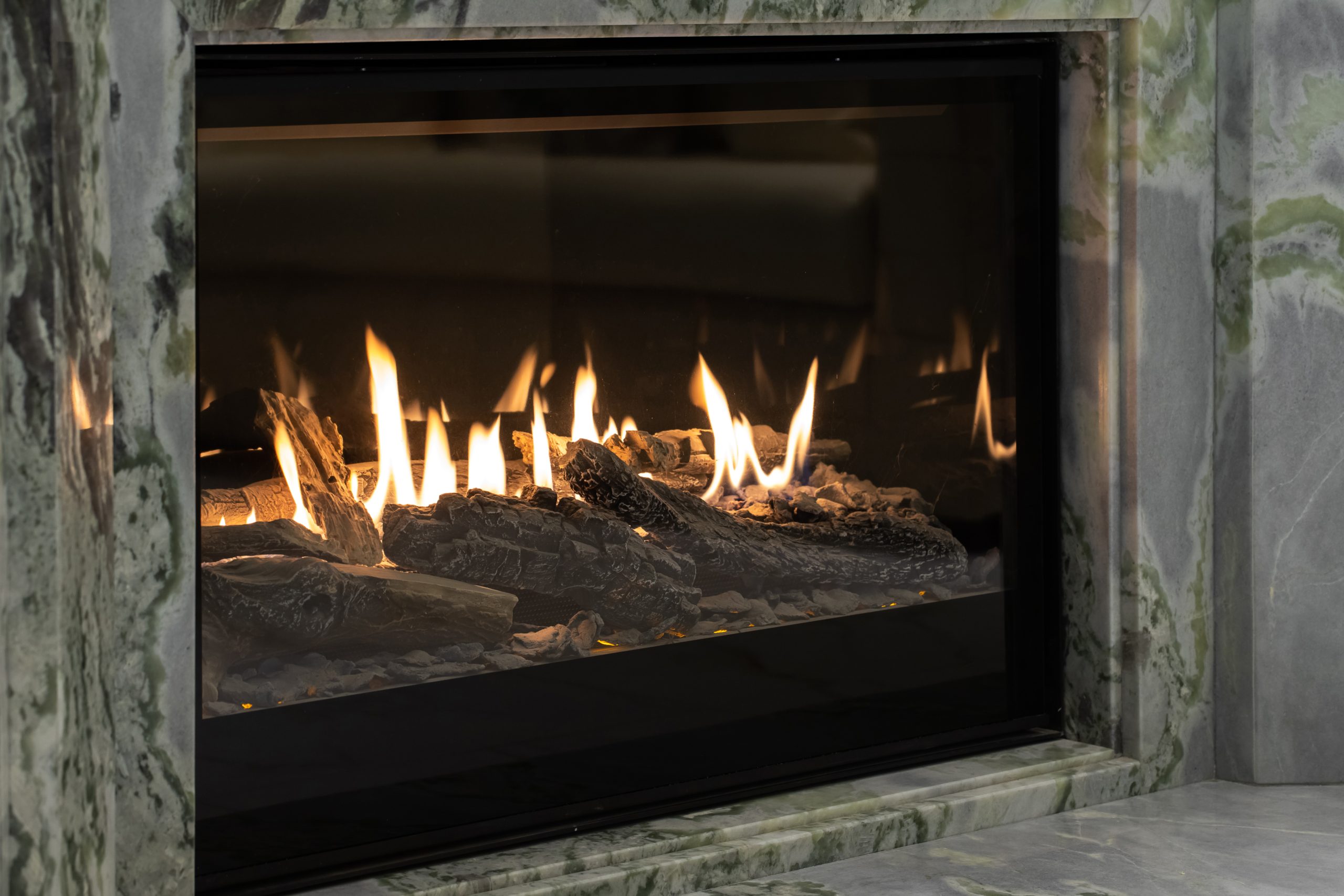
For homeowners in Manchester, Bedford, Concord, and throughout Southern New Hampshire, a gas fireplace conversion is one of the most popular home upgrades right now. Trading a traditional wood-burning fireplace for a gas system means less mess, more control, and consistent warmth through long New England winters. But before you make the move, there are real questions worth answering. Here is what we want Manchester-area homeowners to know before making any decisions.
Is a Gas Fireplace Cheaper to Run Than Wood?
For most Southern NH homeowners, the cost comparison depends on fuel prices, efficiency ratings, and how frequently you use the fireplace. Gas fireplaces typically deliver better cost predictability over a full heating season compared to wood. Here is a breakdown of the key factors:
- Fuel price stability: Natural gas and propane rates tend to be more consistent than cord wood prices, which shift seasonally across towns like Goffstown, Hooksett, and Bow.
- Higher efficiency: Gas fireplaces convert 70 to 99% of fuel into usable heat. Wood-burning systems lose a significant portion up the flue, requiring more fuel to reach the same level of warmth.
- Lower maintenance costs: Wood fireplaces require annual chimney sweeping and creosote removal. Gas systems have fewer ongoing service demands, reducing what you spend each year.
- No storage expenses: Eliminating the cost of buying, hauling, and storing firewood adds up to meaningful savings across many winters.
Can Any Fireplace Be Converted to Gas?
Not every fireplace is a straightforward candidate for a gas fireplace conversion. The condition of your existing setup, your home’s fuel supply, and local building codes all play a role in determining what is possible. Here is what affects eligibility:
- Existing firebox condition: The firebox and surround must be structurally sound. Cracked masonry, deteriorating mortar, or a damaged liner may need to be addressed before conversion work begins.
- Venting compatibility: Your current chimney flue must be evaluated to determine whether it can accommodate a gas insert or log set, or whether a new liner will need to be installed.
- Gas supply access: Your home must have an existing natural gas line in a workable location, or propane will need to be considered as an alternative fuel source.
- Local code compliance: Southern NH municipalities, including those throughout Hillsborough County, have specific permitting requirements for gas appliance installations that must be followed.
What Does a Gas Fireplace Conversion Involve?
A gas fireplace conversion is more involved than simply swapping out logs. Professional installation is critical, and in New Hampshire, that means licensed technicians handling the gas connections. Here is what the process typically includes:
- Site assessment: A technician visits your home to evaluate the existing fireplace, chimney, and gas access. This step prevents costly errors before any equipment is ordered or purchased.
- Gas line connection: A licensed NH gas fitter connects the appliance to your home’s fuel supply. This step requires a certified professional and cannot be completed as a DIY project.
- Appliance installation: The gas insert, log set, or fireplace unit is fitted properly within the firebox to manufacturer and code specifications.
- Chimney liner installation: Many gas conversions require a stainless steel liner to be run through the existing flue to meet venting requirements and protect the chimney structure.
- Testing and inspection: The system is tested for proper function and inspected to confirm it meets New Hampshire code standards before use.
Do Gas Fireplaces Need to Be Vented?
Venting requirements for gas fireplaces depend on the type of unit installed. There are three main categories: direct-vent, natural-vent, and vent-free, each with different requirements and trade-offs that Southern NH homeowners should understand before making a purchase decision.
Direct-vent fireplaces draw combustion air from outside the home and exhaust through a sealed flue, making them one of the most commonly recommended options for existing homes. Natural-vent units use the existing chimney flue and are a strong fit for traditional masonry fireplaces that already have a functioning flue liner.
Vent-free gas fireplaces require no external venting, which makes them simpler to install in certain situations. However, they are not permitted in all rooms or all municipalities, so checking local codes is an important early step whether you are in Manchester, Derry, or Londonderry. A qualified installer can walk you through which venting type is appropriate for your specific home.
Can I Switch Back to Wood After Converting to Gas?
Reversibility is a common concern for homeowners considering a gas fireplace conversion for the first time. How feasible it is depends on how the conversion was completed and what modifications were made to the fireplace and chimney along the way.
In many cases, particularly when a gas insert was placed into an existing masonry fireplace, reverting to wood is technically possible but not always practical. A gas liner installed in the flue would need to be removed, and the chimney would need to be inspected and potentially re-lined for wood-burning use. That adds both cost and time to the process.
If preserving the option to return to wood someday is important to you, bring that up with your installer before the project begins. A knowledgeable team can walk you through which conversion approach leaves the most flexibility, so you go into the project fully informed about your long-term options.
Start Your Gas Fireplace Conversion With a Team That Knows NH
The team at Ceaser Chimney Hearth & Home has been serving homeowners in Manchester and throughout Southern NH for decades. Our in-house certified installers handle every gas fireplace conversion from consultation to final inspection, with zero subcontracting involved. If you are ready to explore your options or want to talk through what your specific fireplace would require, give us a call or visit the store during business hours to get started.